This is a brief essay in response to Sarah O'Connor's article in The Financial Times Weekend Magazine published on Saturday 16 November 2017 (O’Connor & Burn-Murdoch, 2017), the conversation it triggered locally and nationally. It is also a response to the meeting held by LeftCoast, ‘Left Behind – Blackpool a Drop Out Town?’ on 18 January 2018 and the mini-manifesto produced by LeftCoast, which will form the foundation for, Left Behind... #2 - Creative Conversation on the 8 February 2018.
The article prompted a renewed personal interest in the decline and fall of Blackpool. I arrived on the Fylde Coast in 1971. Blackpool was in full swing but the chains were well rusted through and it was clear from the public debate and the newspaper headlines that the infrastructure and superstructure was starting to crumble. Family holidays were in decline but weekends, particularly during the “Lights”, were more popular than ever, if the number of cars queuing to get into Blackpool on a Friday evening was anything to go by, and this was pre M55.
Sarah O'Connor's article laid bare the problems of economic decline, low wage economy, social deprivation and the evidence of conflicting government legislation, re benefits, and muddled thinking by local and regional politics. Digging in the archives revealed a library of dust covered reports of one sort or other going back to 2003 and probably further if I could have raised the enthusiasm to look. These were reports that identified all the problems and offered a range of miracle solutions to halt Blackpool’s economic decline and cure the resultant social deprivation. Then there were the government reports offering analysis, solutions and in some cases olive branches and the occasional wad of money to reinvent, save and invigorate coastal or seaside towns and liberate them of their post-industrial ills. Inevitably to add cream to the mouldering pile there are the academic papers and reports that say all the same things but in a language that no one understands.
Showing posts with label blackpool. Show all posts
Showing posts with label blackpool. Show all posts
Wednesday, January 24, 2018

Thursday, November 23, 2017
Left behind: can anyone save the towns the economy forgot? - Financial Times Weekend Magazine
The Financial Times Weekend Magazine published on Saturday 16 November 2017 - link
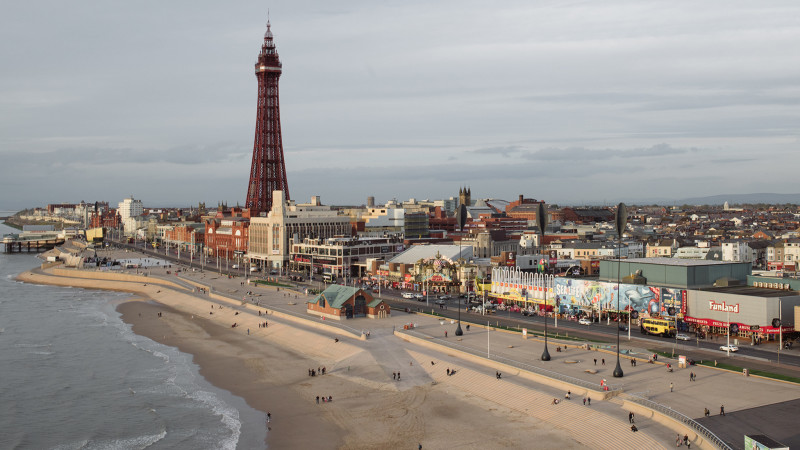
O’Connor reports on why national policy has failed and asks, what are locals doing to turn things around? It is not clear from the report why national policy has failed, surprising, given the apparent thoroughness of the research. I would suggest that the answer to her question is, the locals have done a great deal, as she would have discovered if her research had been completed, the information is in the public domain.
There is further comment in later blog posts...
On The Edge: A Response
This is a response to Sarah O'Connor's article in The Financial Times Weekend Magazine published on Saturday 16 November 2017, On the edge: Inside the town that the British economy forgot (O’Connor & Burn-Murdoch, 2017) Sara's dystopic view of Blackpool, generated an online response which one suspects surprised even the writer. Many of the comments acclaimed the quality of the article. However, a number bemoaned the absence, even as a footnote, of any reference to the positive developments and investment that are taking place in the town.O’Connor reports on why national policy has failed and asks, what are locals doing to turn things around? It is not clear from the report why national policy has failed, surprising, given the apparent thoroughness of the research. I would suggest that the answer to her question is, the locals have done a great deal, as she would have discovered if her research had been completed, the information is in the public domain.
There is further comment in later blog posts...
Sunday, October 10, 2010
My Art in a Blackberry Commercial
Recently Blackberry shot a commercial for the new Torch handset featuring Will Ramsay the owner of Wills Art Warehouse in Putney, where I sell my art. The commercial was shot during recent exhibition where my work was on display. As luck would have it they caught a quick glimpse of one of my works, "Blackpool Rocks" 15 secs into the clip. Don't blink or you will miss it. They obviously think it is recognisable as I had to sign a release agreement!
This is what you are looking out for!

The launch of the ad is intended to coincide with the Affordable Art Fair another of Will Ramsay's successful innovations. This years event runs from 21 - 24th October in Battersea Park, London.
This is what you are looking out for!

The launch of the ad is intended to coincide with the Affordable Art Fair another of Will Ramsay's successful innovations. This years event runs from 21 - 24th October in Battersea Park, London.
Sunday, November 22, 2009
Where is Modern Art Now? - Blackpool Art Fair!
This week has seen a veritable cornucopia of art programmes on TV. Art on Your Wall, BBC2 Mon; Where is Modern Art Now?, BBC4 Wed; Ugly Beauty, BBC2 Sat and on our own doorstep, The Blackpool Art Fair at the Grundy Art Gallery till January. It was after my visit to the Grundy that the question posed by the BBC2 programme, "Where is Modern Art Now", struck me. If I had thought the BBC programme clouded by obfuscation and pseudo-ism, it had not prepared me for the Blackpool Art Fair. We expect obfuscation and pseudo-ism from art experts such as Dr Augustus Casey-Hayford and Waldemar Januszcack but not from Stuart Tullock.
I arrived at the Grundy on Saturday morning as a privileged preview ticket holder, I had a piece in the exhibition. I was looking forward to an exhibition of the work of Blackpool's artistic best. My reaction, confused and rather disappointed. What did we have here. I walked in the first gallery space to find Blackpool Art Society exhibition sparsely spread over the relatively large wall area. But where was the open exhibition? In the large gallery maybe. No, this space was filled with a strange mishmash of installations based on Blackpool Model Train Society, Blackpool Model Boat Club, Cake Decorating, Knitting, Dog Decorating and a cutting edge avant-garde conceptual art installation by Supercollider (I will come back to that in a moment). Where the hell was the open exhibition? Ah, here they are stuffed into the two small side galleries!
Why? I had trouble finding my A1 size piece of work amongst the mishmash that confronted me. The hanging was 2 to 3 works high, titled with small postal labels typed in 12 point text. Just not good enough for a Gallery of the Grundy's stature. Half an hour later with a crick in my neck and rapidly deteriorating eye sight I still had not found two pieces of work I knew should be in there. As a contributing artist I feel affronted that my hard work should be crammed into a shoe box. Particularly when the rest of the gallery is given over to work which can hardly be considered suitable for an "Art Fair"! What was the rational behind extravagantly hanging the work of Blackpool Art Soc in a huge space at the expense of the Open exhibition?
Back to the beginning, had I missed the point? Was the "Blackpool Art Fair" really one big Post-Post-Modern conceptual nay, avant-garde "Modern" art installation? Was the analist art of the hobbyist (leisure) artist, the hobby sculptors (modellers) the conceptual "true" art (Supercollider Embassy) where modern art is now! Oh, and the work of those pretentious professional and unattached arty types will make up the numbers and help fill the rest of the space!
You have to question what sort of relationship the Grundy Art Gallery is trying to foster with the local art community and the public at large. Why have they chosen to place the polarised art of Blackpool Art Soc and Supercollider at the centre of miss titled "Art Fair". Is this an effort to be even handed? I don't think so, there has to be another agenda. Questions need to be answered! Maybe a clue to the answer lies in one of the handouts I picked up at the "Art Fair" (As I have no wish to embarrass the author)
------------------------------ ---------------------- committed to the dissemination of contemporary arts practice in the town by presenting a diverse and dynamic programme of temporary contemporary art projects. ----------------------------------------------------- is well positioned to provide the community with a forum for intellectual engagement, debate, participation and appreciation. ------------------------------------dedicated to delivering a programme of exhibitions and events which reflects the diverse and dynamic nature of contemporary arts practice, embracing artists at all stages of their careers working with a wide range of contemporary issues and concerns, ----------------------------------will also act as a point of exchange between the audience and contemporary arts practice, providing a dedicated forum for engagement. ---------------------------------- aims to develop reciprocal relationships with other institutions, groups and initiatives. --------------------------------------non-profit, artist led organisation, run by unpaid volunteers motivated by an intense passion for the arts and the cultural development and regeneration of Blackpool. Through the programme of exhibitions, projects and events ------------------------ aims to make an effective and meaningful contribution to the re-development and regeneration of culture of Blackpool.Obfuscation or what? I clearly need to update my personal statement! Why was there was no reference to Post-Post-Modernism in the BBC2 programme "Where is Modern Art Now" is Blackpool ahead of the game?
Saturday, October 31, 2009
Exhibition - Blackpool and Beyond

Solaris Centre, New South Promenade, Blackpool, FY4 1BB
8.30 - 5.00 weekdays, 10.00 - 5.00 weekends
2nd to 27th November, Entrance Free
8.30 - 5.00 weekdays, 10.00 - 5.00 weekends
2nd to 27th November, Entrance Free
Blackpool is a town trapped between its history and its future, decay and regeneration. Familiar memories, fading signs, torn posters, peeling paint, cracked walls and crumbling façades. Happy memories fading into uncertainty.
The work is intended to provoke thought and ask questions about our history. A reminder of how easy it is to pass-by aspects of our everyday surroundings without even seeing them. The work could be seen as a metaphor for the way we view the older members of our community. Something decrepit and insignificant to be ignored and taken for granted. Rather than something valuable, to be respected, cherished and enjoyed.
I have been recording the changing face of Blackpool for many years. I find beauty and inspiration in the fading infrastructure and glitzy façade. My current work endeavours to capture the feeling of deterioration, dilapidation and decay that lays just behind the flashy frontage.
The work employs an intriguing mix of photography, digital interpretation and experimental fine art process.
You can view my work here www.alistairparkerart.com
Map & Directions
View Larger Map
Subscribe to:
Posts (Atom)